6 Best Coolers for Camping (October 2026)
The best camping coolers include the Coleman Xtreme Rolling Cooler for group campsites, the RTIC 32 Ultra-Light for smaller camp kitchens, and the Titan Zipperless HardBody for quick snack access.
On this page (6 sections)
The Coleman Xtreme Rolling Cooler is the best cooler for camping with a group when the path from your car allows rolling. Choose the RTIC 32 Ultra-Light for a smaller camp kitchen, or a soft cooler when you need to carry lunch and drinks away from camp.
Start with your menu and the route to your campsite. A cooler needs enough room for food and ice, but it also needs to fit your vehicle and remain manageable once loaded.
A useful setup may include a main food cooler and a separate bag for frequent drink stops. You don't need both if one cooler covers your meals without becoming difficult to move.
For more options by size and style, read our guide to hard, wheeled and soft camping coolers. The camping cooler selection guide helps turn your trip plan into a shortlist.
Our picks at a glance
-
1

-
2

-
3

- 4
 Best for lake outingsCheck it
- 5
 Best for car-side camp kitchensCheck it
- 6
 Check it
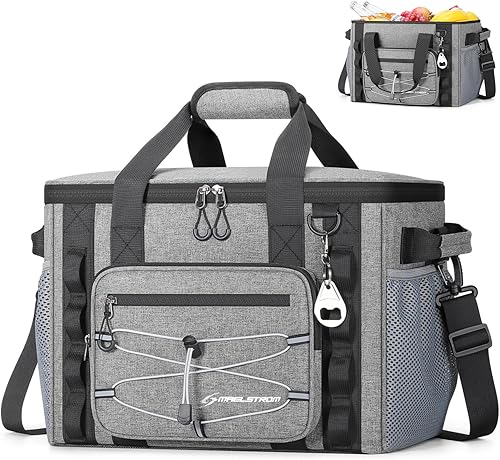
Maelstrom 30/40 Can Soft Cooler
Best for limited storage space
Which is the best cooler for camping?
The Coleman Xtreme Rolling Cooler is the strongest fit here for shared campsite supplies, while the RTIC 32 Ultra-Light suits a compact food load. Choose a soft cooler when carrying convenience, lunch organization or storage between trips matters more than bulk capacity.
JunkDrawerJoy compared capacity, empty weight, carry methods, food organization and brand cooling claims. The order favors campsite usefulness, but your route and meal plan should decide which model you buy.
Use the table to narrow the size and carrying style first. Then read the matching product section for the tradeoff that matters at camp.
| Product | Best for | Capacity | Can capacity | Carry style | Our score |
|---|---|---|---|---|---|
| Coleman Xtreme Rolling Cooler | group campsites | 50 qt | Up to 84 cans | Wheels and retractable telescoping handle | 8.8 |
| RTIC 32 Ultra-Light | smaller camp kitchens | 32 qt | Up to 48 cans | Hand carry | 8.7 |
| Titan Zipperless HardBody | quick snack access | 12.68 qt | 16 cans plus ice | Adjustable shoulder strap | 8.5 |
| RTIC 20 Can Soft Cooler | lake outings | 20-can model | 20-can model | Shoulder strap | 8.0 |
| Coleman Classic Hard Cooler | car-side camp kitchens | 52 qt | Up to 80 cans | Swing-up handles | 7.9 |
| Maelstrom 30/40 Can Soft Cooler | limited storage space | 22 L | 30 cans of 330 mL | Shoulder, hand or two-person carry | 7.4 |
The best camping coolers for different trips
Choose the cooler that matches its main job: shared meal storage, a smaller camp kitchen or a bag for outings. The picks below stay in score order, with clear reasons to choose or skip each one.
Coleman Xtreme Rolling Cooler
- 50 qt capacity
- Retractable telescoping handle
- Drain for emptying without tipping
- Seat lid supports up to 250 lb
Choose this wheeled hard cooler for shared food and drinks at a campsite reached by a rollable path. Its drain makes emptying meltwater easier when the cooler is too heavy to tip.
Pros
- Wheels reduce carrying on suitable routes
- Retractable handle folds away for storage
- Drain allows emptying without lifting
Cons
- Steps and obstacles still require lifting
- Group meals and ice reduce space available for drinks
Coleman Xtreme: best camping cooler for shared supplies
Buy the Coleman Xtreme when several people will share food and drinks and you can roll the load most of the way to camp. Its 50 qt capacity gives it room for a larger camp kitchen without relying on a shoulder carry.
Coleman says the wheels handle sand, gravel and grass, and the telescoping handle retracts for storage. Still, a wheel-friendly surface can include awkward sections, so check for steps, roots and tight turns before filling the cooler.
Coleman claims up to 5 days of ice retention in temperatures as high as 90°F. Use that as a reason to consider it for longer outings, then build your ice plan around weather, lid use and refill access.
The drain is useful after a trip because you can empty meltwater without tipping a heavy box. Place the cooler where you can reach the drain before surrounding it with camp gear.
Skip this model if reaching camp means a long carry or repeated lifting over obstacles. Its empty weight is 12.7 lb, but food, drinks and ice will account for much of the load you actually move.
RTIC 32 Ultra-Light
- 32 qt capacity
- 14.7 lb empty weight
- Up to 2.5 in of closed-cell foam insulation
- Drain plug included
A smaller hard cooler for campers who pack a compact menu and want a firm box for food storage. Check the loaded weight before choosing it for a long carry.
Pros
- Smaller capacity suits compact meal plans
- Can serve as a bench or tabletop
- RTIC says it is over 30% lighter than same-capacity rotomolded coolers
Cons
- Food and ice add to its empty weight
- Less room for bulky meal containers than the larger hard coolers
RTIC 32 Ultra-Light: for a compact camp kitchen
Choose the RTIC 32 Ultra-Light when your menu fits a smaller hard cooler and you want to keep meal containers in a firm box. It's a good match for campers who separate shelf-stable snacks from food that needs chilling.
The 32 qt capacity rewards a tidy packing plan. Flat containers, pre-portioned ingredients and fewer drink bottles leave more useful space than bulky retail packaging.
RTIC says it is more than 30% lighter than rotomolded coolers of the same capacity. That comparison doesn't make it the lightest cooler here: it weighs 14.7 lb empty, so count the full load before planning a long walk.
It has up to 2.5 in of closed-cell foam insulation and can serve as a bench or tabletop. Keep the lid clear during meal prep so you can reach food without first moving dishes and cooking tools.
Skip it if your camp meals depend on large tubs, several upright bottles or enough chilled food for a group without refills. For construction differences behind the weight comparison, read what a rotomolded cooler is.
Titan Zipperless HardBody
- 16-can capacity plus ice
- Zipperless flip-open lid
- Removable HardBody liner and SmartShelf
- Adjustable padded shoulder strap
Choose the Titan for organized lunches and snacks that need to stay separate from heavy drinks. Its removable shelf helps protect soft food, and the flip-open lid avoids zipper handling.
Pros
- Shelf separates soft food from hard items
- Shelf removes for larger containers
- Insulated front pocket holds small essentials
Cons
- Limited room for a group's main food supply
- Shelf divides space available for tall containers
Titan Zipperless HardBody: for organized lunches
Buy the Titan when your cooler's main job is carrying lunch, drinks and soft snacks that need protection from heavier items. The removable SmartShelf is its clearest reason to choose it over a simple open compartment.
Put firmer items below the shelf and softer food above it, leaving space for cooling supplies. Remove the shelf when a tall container matters more than separating the load.
The zipperless flip-open lid makes repeated snack access straightforward. Close it promptly after taking food out, since easy access only helps your ice supply if the lid spends little time open.
An adjustable shoulder strap with an anti-slip pad supports carrying, while the insulated front pocket keeps small essentials separate. Utensils and napkins are useful pocket items because retrieving them doesn't require opening the main compartment.
Titan claims up to 2 days of ice retention. This is best treated as a lunch and outing cooler, or a second cooler beside your main camp food box.
Skip it as the sole cooler for several people's camp meals. Its compact format works best when you decide exactly what needs chilling before you pack.
RTIC 20 Can Soft Cooler
- 20-can model
- Waterproof zipper
- Heavy-duty nylon exterior
- RTIC says it floats
A carry-along cooler for drinks and snacks when your camping day includes a trip to the water. RTIC describes the closed waterproof zipper as leak-proof and says the cooler floats.
Pros
- 3.5 lb empty weight
- Waterproof zipper helps contain spills
- Shoulder strap for carrying
Cons
- Zipper must be fully closed to contain leaks
- Small format limits group meal storage
RTIC 20 Can Soft Cooler: for trips to the water
Choose the RTIC soft cooler when drinks and snacks need to leave the campsite with you. The shoulder strap and 3.5 lb empty weight make it a more suitable starting point for a modest carried load than either larger hard cooler.
Its heavy-duty nylon exterior surrounds up to 1.5 in of closed-cell foam. RTIC claims up to 2 days of cooling when you follow its Cooling Tips.
The waterproof zipper is the main difference from the Titan's quick-access lid. RTIC describes the cooler as leak-proof when closed, which suits carrying a bag that may shift as you walk.
Close the zipper fully before moving it, and keep grit away from the closure. Organize snacks near the top so you don't need to unpack the bag whenever someone wants a drink.
RTIC says it floats, but secure your supplies near water rather than relying on that feature to prevent loss. A floating bag can still move away from shore.
Skip it when your priority is a broad compartment for group meals or fast, frequent access without a zipper. Compare our best soft coolers if a carry-along bag is your main need.
Coleman Classic Hard Cooler
- 52 qt capacity
- Swing-up carry handles
- Molded cup holders with drains
- Stain-resistant liner
This roomy hard cooler suits a camp kitchen close to your vehicle, where you can unload it once and leave it in place. Swing-up handles help with lifting, while the liner simplifies cleanup.
Pros
- Room for shared food and drinks
- Cup holders fit tumblers up to 30 oz
- Coleman says the lid supports up to 250 lb
Cons
- No wheels for moving a full load
- Wide shape needs room in the vehicle and at camp
Coleman Classic: for a camp kitchen beside the car
Choose the Coleman Classic when you want a roomy food box that will stay near your vehicle or picnic table. Its 52 qt capacity suits shared supplies, while the swing-up handles provide a way to lift it into position.
At 8.7 lb empty, it weighs less than the other hard coolers here. Once packed, though, its larger food and ice load can make carrying the bigger concern.
The molded cup holders have drains and fit tumblers up to 30 oz. They help organize drinks around camp, but avoid turning the lid into a permanent storage surface that blocks access to meals.
Coleman claims up to 3 days of ice retention. That makes refill access worth considering for a longer stay, especially if the same cooler will be opened often for drinks.
The stain-resistant liner is useful after spills, though food residue still needs prompt cleaning. Pack sauces and raw ingredients in closed containers to reduce cleanup and keep meltwater away from food.
Skip it if you will move a full cooler around camp throughout the day. If reducing carrying is your priority, compare the best wheeled coolers.
Maelstrom 30/40 Can Soft Cooler
- 22 L capacity
- Collapsible design
- Multiple exterior pockets
- Shoulder, hand or two-person carry
Choose this collapsible bag for short trips when storage space between outings matters. Exterior pockets separate small gear from the cold compartment, and side handles allow a shared carry.
Pros
- Folds down between trips
- Several pockets organize small items
- Detachable bottle opener included
Cons
- Cooling claim suits shorter outings
- 30-can figure uses 330 mL cans
Maelstrom soft cooler: for storage-conscious campers
Choose the Maelstrom when you need a cooler for shorter outings and want it to fold away afterward. Its collapsible design is especially useful when an empty hard cooler would occupy needed closet or vehicle space.
This version holds 22 L, with a can figure based on 30 cans of 330 mL. Leave room for ice and food containers rather than using that count as your packing target.
The exterior pockets give utensils, napkins and small gear their own places. A detachable bottle opener is included, so you can keep it with the bag instead of searching through cooking supplies.
You can carry it by the top handle, use the adjustable shoulder strap or share the load with the side handles. Choose the method after packing, since a comfortable empty bag can feel quite different with drinks and ice.
Maelstrom claims up to 24 hours of cooling with ice. Plan around day trips, short stays or ready access to fresh ice.
Skip it for remote trips where one cooler must hold the full chilled food supply for several days. Dry the interior fully before collapsing it for storage.
How should you choose a camping cooler?
Choose by meal volume, loaded carrying effort and ice access, in that order. Shell style and extra features matter once those needs are covered.
Build a menu before choosing capacity
Count the meals that need chilled ingredients, then add drinks and ice. A trip built around dry foods and a few fresh items needs less cooler space than one with several prepared meals.
Group the containers you actually plan to use on a counter. Large tubs, rigid bottles and awkward shapes can consume space that a can count doesn't reveal.
Decide which drinks need to start cold and which can wait outside the cooler until space opens up. Keeping every beverage cold from departure can force you into a larger box than your food requires.
Avoid filling the cooler with food and hoping to squeeze ice into the gaps afterward. For help balancing the two, read how much ice you need for a cooler.
Measure the vehicle and the packing space
Check the cooler's footprint against the space left after tents, sleeping gear and cooking supplies are loaded. Include enough room to lift it out without unloading everything else.
Think about lid clearance if you'll open the cooler inside the vehicle. A box that fits tightly beneath a shelf may be difficult to use during roadside stops.
At camp, leave room around the cooler for opening, carrying and draining. A shaded corner is less useful if reaching it requires moving chairs every time you prepare lunch.
Judge the full carrying route
Choose wheels for a mostly rollable route and a strap for a smaller load you can comfortably carry. Neither option removes the need to lift the cooler into your vehicle.
Check the campsite approach for stairs, steep ground, deep sand and narrow gaps. A short smooth path and a short rocky path place very different demands on the same loaded cooler.
If two people will share the lift, plan that before packing. Don't assume help will be available when you arrive or when you need to move the cooler later.
For sandy approaches, compare wheeled coolers for the beach with the route you expect.
Match cooling needs to refill access
Plan cold storage through the return drive, including delays. A campsite with nearby ice supplies gives you more flexibility than a remote stop where all cooling supplies must travel with you.
Brand claims describe different products under different conditions. Don't read a longer claim as a promise that your food will remain cold for the whole trip.
Use a cooler thermometer to check storage conditions, and keep perishable food sealed. The presence of some ice doesn't tell you the temperature of every container.
For a closer look at matching trip length to food volume, our guide to choosing a cooler for camping covers the planning steps.
How should you pack and set up a camping cooler?
Chill the contents first, pack by meal order and choose a shaded spot before unloading the rest of camp. Those steps reduce avoidable warming and make food easier to reach.
Prepare food before departure
Pre-chill the cooler using ice or cold packs, then replace that cooling supply as needed before final packing. Starting with a warm box makes your trip ice do extra work.
Chill drinks and ingredients before adding them. Freeze suitable foods ahead of time if that fits your menu, allowing for thawing before the meal when you need them.
Remove packaging that serves no purpose at camp, but keep food sealed and identifiable. Label similar containers so you don't hold the lid open while guessing what's inside.
Put raw ingredients in secure containers and keep them separate from ready-to-eat food. Don't rely on a cooler's leak-resistant construction to contain a leaking food package.
Pack for the next meal
Place food for later meals lower down and the next meal's ingredients within easy reach. Keep delicate food away from heavy drinks, using a shelf or separate container where available.
Fill unused space with suitable cooling supplies rather than loose items that don't need chilling. Keep a simple mental map of where breakfast, lunch and dinner ingredients sit.
For cooking, remove the ingredients you need together and close the lid. Returning for one item at a time adds openings and slows meal prep.
Set up for shade and access
Choose a stable spot out of direct sun when possible, allowing for shade to move during the day. Keep access to handles, closures and any drain clear.
Follow campsite food-storage rules, especially where wildlife is a concern. A hard shell or closed zipper does not establish that a cooler is approved for animal-resistant storage.
If you bring two coolers, use one for frequently opened drinks and the other for meals. With one cooler, group drinks where they are easy to grab without moving food.
Review how to keep ice longer in a cooler for more ways to reduce unnecessary heat gain.
Which camping cooler mistakes should you avoid?
Avoid buying by can count alone, overloading the carry system and treating ice claims as food-storage limits. These mistakes can leave you with the wrong cooler even when its headline specs look suitable.
Buying more space than you can move
A larger cooler can hold more supplies, but that only helps if you can load and unload it. Choose capacity around a realistic packed load rather than the largest box your trunk can hold.
If the route includes a difficult lift, pack some supplies separately for transport and finish loading at camp. Keep chilled food cold during that transfer.
Giving every item a place in the cold compartment
Bread, dry snacks, utensils and spare unopened shelf-stable items don't need to occupy your main chilled space. Use a separate food box or suitable exterior pockets.
Keep fragile food protected rather than wedging it into the last gap. A crushed lunch wastes the space you tried to save.
Leaving the lid open during decisions
Decide what you need before opening the cooler. Move menu choices, drink discussions and food sorting outside the cold compartment.
Take out a meal's ingredients together and put unused chilled food away promptly. Easy access is useful only when it leads to shorter openings.
Storing the cooler damp after the trip
Empty food, wrappers and cooling supplies when you return. Wash the interior, lid edges, removable parts and any drain according to the cooler's care instructions.
Let every part dry fully before closing or folding the cooler. Our guide to cleaning a cooler and removing smells covers care after spills and longer storage.
Which camping cooler should you choose?
The best cooler for camping is the one that carries your full meal plan and ice supply without making arrival difficult. Choose by the job it will do most often.
- Choose the Coleman Xtreme for shared supplies when most of the route allows rolling.
- Choose the RTIC 32 Ultra-Light for a compact menu in a smaller hard box.
- Choose the Titan for organized lunches and quick snack access.
- Choose the RTIC soft cooler for a modest load that travels to the lake with you.
- Choose the Coleman Classic for roomy storage that stays near the car.
- Choose the Maelstrom for shorter outings and easy storage between trips.
Before ordering, settle 3 details: where the cooler will fit, who will move it when full and where you'll get more ice. If refill access is limited, use our best coolers for ice retention guide to narrow your next comparison.
Sources:
Our top 3 picks at a glance
-
1
-
2
-
3
Frequently asked questions
What size cooler do I need for camping?
Choose capacity around your meals, drinks, ice and refill options. Pack your planned food containers together before choosing a size, then allow space for cooling supplies.
Can counts help compare models, but they don't show how many camp meals will fit beside the ice.
Is a hard or soft cooler better for camping?
A hard cooler usually makes more sense as the main camp food box, while a soft cooler suits smaller loads that travel with you. Choose by the job rather than the shell alone.
Compare the hard and soft cooler tradeoffs against your walking distance, food containers and storage space.
How long will ice last in a camping cooler?
Ice life depends on starting temperature, ice quantity, shade, lid openings and outdoor heat. Brand retention claims provide a planning reference, but they don't establish safe storage time for perishable food.
Use a cooler thermometer and read about how long ice lasts in a cooler before planning a trip without ice refills.
Should I buy a wheeled cooler for a campsite?
Buy a wheeled cooler when most of the route from parking to camp allows rolling. Wheels can reduce carrying, but steps, deep sand, roots and steep slopes can still require lifting.
Check the whole route and your vehicle's loading height before committing to a large cooler.
How can I keep a camping cooler cold longer?
Start with chilled food and a pre-chilled cooler, pack enough ice, and keep the cooler shaded with its lid closed. Organize meals so you can remove what you need quickly.
For trips where cold storage drives the choice, compare our cooler ice-retention picks and plan access to replacement ice.