How Long Does Ice Last in a Cooler?
How long does ice last in a cooler? Expect a few hours to several days, depending on insulation, ice quantity, starting temperature, heat, and lid openings.
On this page (8 sections)
- How long does ice last in a cooler?
- What makes ice melt faster?
- How should you pack a cooler to make ice last longer?
- Does block ice last longer than cubes?
- Should you drain the water as ice melts?
- Which cooler should you buy for longer ice life?
- How can you tell if food is still cold enough?
- How long will ice last in your cooler on your trip?
Ice lasts a few hours to several days in a cooler, depending on insulation, packing, starting temperature, weather, and lid openings. To work out how long ice will last in your cooler, start with how you'll use it.
A shaded food cooler opened at meals has an easier job than a drink cooler opened all afternoon. For overnight trips, plan an ice refill option and check food temperature rather than counting on a promised number of days.
How long does ice last in a cooler?
Hours to several days is a useful planning range, not a schedule for replacing ice. Ice melts as it absorbs heat from the cooler walls, the contents, and the air outside.
For a picnic, focus on carrying enough cold food and ice for the outing. For a weekend or longer, give more weight to insulation, lid fit, and access to replacement ice.
Maximum retention claims are hard to compare unless the starting conditions match. Ice left at the bottom also tells you little about the temperature of food near the lid.
How can you estimate ice life in your cooler?
Check your own packing routine before a trip where refilling will be difficult. Load the cooler as planned, keep it in similar conditions, and monitor its temperature and remaining ice through the day.
This gives you a more useful baseline than an empty cooler with a handful of cubes. Allow extra ice for hotter weather, more people, or more frequent openings.
What makes ice melt faster?
Warm contents, outside heat, and repeated openings use up ice faster. Fix these before buying a bigger cooler.
Does insulation affect how long ice lasts?
Insulation and a well-fitting lid slow heat entering the cooler. Check that nothing blocks the lid and that the seal is clean and undamaged.
A larger cooler isn't automatically better. If you fill the extra space with food instead of ice, you may gain storage without gaining useful cold time.
For longer trips, compare coolers with strong ice retention. Our guide to hard, wheeled, and soft coolers helps narrow the type to your carrying needs.
Where should you put the cooler?
Keep it shaded and away from hot surfaces and heat sources. A closed vehicle, sun-baked pavement, grill, or campfire adds heat the ice must absorb.
Move the cooler as the shade shifts. Don't cover the lid with gear you'll need to remove every time someone wants a drink.
How much do lid openings matter?
Long, frequent openings give heat more chances to enter. Pack drinks and snacks where they're easy to find, then close the lid fully after each use.
For a group, a separate drink cooler can protect the food supply from constant opening. That makes more sense than asking everyone to search through dinner ingredients for a can.
How should you pack a cooler to make ice last longer?
Pre-chill the cooler, load cold contents, and reserve enough room for ice. Ice spent cooling warm walls and room-temperature drinks is ice you won't have later.
- Pre-chill the empty cooler with spare ice or frozen packs.
- Remove the pre-chilling water and replace spent ice before loading.
- Pack refrigerated food and drinks, freezing suitable items ahead when practical.
- Place sealed raw meat and seafood below ready-to-eat food.
- Fit ice around and above the contents, keeping the lid free to close.
- Put the first items you'll need within easy reach.
Don't load a warm case of drinks just before leaving and expect the same ice life as a fully chilled load. If you need to add warm drinks later, cool them separately when possible.
Plan the ice space before choosing the cooler size. See how much ice a cooler needs for packing ratios and what size cooler you need for fitting the whole load.
Does block ice last longer than cubes?
Large blocks of water ice generally melt more slowly than small cubes, while cubes fit closely around food and drinks. A mix gives you a reserve of ice plus smaller pieces to fill gaps.
Freeze water in suitable containers with room for expansion. Avoid glass containers that could break as the water freezes.
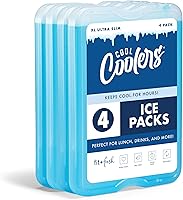
Reusable gel packs suit dry snacks and short outings because they don't release meltwater into the cooler. They still need enough freezer time to freeze fully before departure.
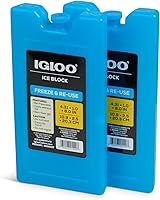
Choose the Igloo blocks for repeat day trips where keeping packaging dry matters. Their non-toxic Ultratherm gel provides localized cooling, so place them near the items you need to keep cold.
Skip this pair as your only cooling supply for a large food load or a trip without freezer access. Hand-wash the blocks after use, check for damage, and refreeze them before the next outing.
Should you drain the water as ice melts?
Keep clean, cold meltwater when it helps chill sealed contents. Drain some when you need space for fresh ice, and remove water contaminated by leaking food.
Draining on a schedule doesn't replace lost cooling capacity. Focus on adding ice when needed and keeping food protected from water.
Use leakproof containers rather than relying on cardboard packaging or loosely closed bags. If the cooler has a drain, use it instead of lifting and tipping a full load.
Which cooler should you buy for longer ice life?
Buy for your packed load and carrying distance, then compare insulation and lid design. Neither of these coolers has a supported day count here, so choose by the features that suit your trip.
Who should choose the YETI Tundra 45?
Choose the Tundra 45 for trips where lid sealing and securing the cooler matter. Its rotomolded shell and molded tie-down slots suit transport on a boat deck or in a truck bed.
Its stated capacity is 26 cans at a 2:1 ice-to-contents ratio. The included dry goods basket keeps snacks above meltwater, which helps separate dry food from the wet lower section.
Skip it if you mainly need a compact lunch cooler or must carry your load a long distance. Check its 25.5 x 16 x 15.5 in exterior against your storage space before choosing it.
Who should choose the RTIC 32 Ultra-Light?
Choose the RTIC for smaller trips where carrying weight matters. RTIC says it's more than 30% lighter than rotomolded coolers of the same capacity.
It holds up to 30 lb of ice alone, so that figure isn't the ice allowance alongside a full food load. Likewise, its maximum can capacity shouldn't be read as space for that many cans plus trip-ready ice.
Skip it if your group needs more food and ice than its interior can hold. A lighter empty cooler still becomes heavy when filled, so plan the carry from your vehicle to camp.
For either choice, our guide to choosing a cooler for camping connects capacity and portability to your trip.
How can you tell if food is still cold enough?
Use a thermometer, not the presence of ice, to check cold storage. Food near the top can warm while ice remains elsewhere.
Keep an appliance thermometer inside and aim for 40°F or below. A food thermometer can check individual items, though one cold reading can't establish their temperature history.
Perishable food should spend no more than 2 hours out of refrigeration, or 1 hour when the surrounding temperature exceeds 90°F. A cooler serves as refrigeration only while it keeps that food cold enough.
The USDA's food safety guidance explains using ice, coolers, and thermometers during a power outage.
If you can't confirm that perishable food stayed cold enough, discard it rather than tasting it. Keep raw food sealed so leaks can't contaminate ready-to-eat items.
How long will ice last in your cooler on your trip?
Choose around your hardest day: the heat, carrying distance, and time until the next ice refill. How long ice lasts in a cooler matters most when you have no easy way to replace it.
Pick the Tundra for its gasket, dry basket, and tie-down options. Choose the RTIC when its lighter build suits the carry, or add Igloo blocks for dry cooling on repeat day outings.
Before spending on another cooler, correct warm loading and frequent openings with our guide to keeping ice longer in a cooler.
After the trip, empty the cooler, clean it, and let it dry fully before storage. Follow our cooler cleaning guide to remove food residue and smells before packing again.
Frequently asked questions
How long does ice last in a cooler?
Ice can last from a few hours to several days, depending on insulation, ice quantity, starting temperature, outside heat, and lid openings. Plan around your actual trip conditions rather than a maximum retention claim.
For overnight trips, allow room for plenty of ice and know where you can get more.
Does a cooler keep ice longer if it is full?
A cooler filled with plenty of ice and chilled contents generally stays cold longer than the same cooler with very little ice. Fullness alone isn't enough: extra food can crowd out the ice you need.
Choose a size that holds both your supplies and a useful reserve of ice.
Should I drain melted water from a cooler?
Keep clean, cold meltwater when it helps chill sealed contents, and drain some when you need room for fresh ice. Remove contaminated water and protect food in leakproof containers.
Neither cold water nor remaining ice confirms that every item stayed safe, so use a thermometer to check storage temperature.
Do ice blocks last longer than cubed ice?
Large blocks of water ice generally melt more slowly than small cubes because they have less surface area for their volume. Cubes fit around food and drinks more easily, helping cool them quickly.
Combine both for longer trips, but don't assume reusable gel packs behave the same as frozen water.