How to Choose a Cooler for Camping
To choose a cooler for camping, match food volume, room for ice and loaded carrying weight to your trip. Pick a hard cooler for shared supplies, wheels for a suitable path, or a collapsible bag for short outings and compact storage.
On this page (8 sections)
- How do you choose a cooler for camping?
- What cooler size works for your camping group?
- Should you bring a hard, wheeled or soft cooler?
- How long should a camping cooler keep ice?
- How should you pack and set up a camping cooler?
- What mistakes should you avoid when buying a camping cooler?
- How should you clean a cooler after camping?
- Which camping cooler should you choose?
To choose a cooler for camping, start with your food load, room for ice and the route to camp. Trip length matters, but a large cooler is little help if you cannot lift it or fit it beside your gear.
Plan the meals and drinks that need chilling, then decide how you will keep them cold until your next ice stop. Choose the cooler type after those needs are clear.
Our camping cooler picks offer more options once you know your needs. This guide helps you narrow them down without buying extra capacity you will struggle to move.
How do you choose a cooler for camping?
Choose by storage needs first, transport second and features third. A seat lid or extra pockets can be useful, but neither solves a shortage of ice space or an awkward carry.
Work through these decisions in order:
| Decision | What to work out |
|---|---|
| Cold food load | Which meals, drinks and ingredients need chilling at the same time? |
| Cooling plan | How much room will ice or cold packs need, and where can you replenish them? |
| Access to camp | Will you carry, roll or share the load with another person? |
| Vehicle fit | Can the cooler pass through the opening and sit beside your other gear? |
| Camp use | Will everyone open it for drinks, or mainly at meal times? |
For a car-side campsite, a larger shared cooler can simplify meal storage. For a walk-in site, carrying weight can matter more than spare room.
Think about the trip home, too. Leftover food, wet gear and melted ice can make loading less tidy than it was when you left.
For a broader look at the main designs, see our guide to hard, wheeled and soft camping coolers.
What cooler size works for your camping group?
Choose enough capacity for your largest cold load plus cooling space, rather than using a fixed number of quarts per camper. A group cooking fresh meals needs different storage from one bringing mostly shelf-stable food.
Lay out the containers you expect to pack before ordering. Include tall bottles, breakfast ingredients, snacks and leftovers, not just the main meal.
Then separate items that can travel outside the cooler. Keeping unopened shelf-stable drinks or dry snacks elsewhere leaves more room for food that needs chilling.
| Cooler | Capacity | Where it fits |
|---|---|---|
| Coleman Classic Hard Cooler | 52 qt; up to 80 cans | Shared supplies at a campsite near the vehicle |
| Coleman Xtreme Rolling Cooler | 50 qt; up to 84 cans | A larger load with a practical rolling route |
| RTIC 32 Ultra-Light | 32 qt; up to 48 cans | A compact meal plan in a smaller hard box |
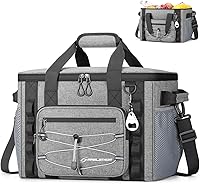
| Maelstrom 30/40 Can Soft Cooler | 22 L; up to 30 cans of 330 mL each | Day outings, a small load or a second drinks cooler |
Can counts are not meal capacity. Containers and cooling materials change how much you can fit, and different packing methods can produce different can counts.
A shallow food box may pack well where a tall pitcher wastes space. Check the shape of your actual containers instead of assuming every cooler with similar capacity holds the same meal plan.
Use our cooler size guide for planning help. Our guide to how many cans fit in a cooler explains why drink counts and usable food space differ.
How to choose camping cooler capacity for your menu
Build capacity around what must stay cold until your next resupply, rather than every item you will consume all trip. Buying fresh food partway through can reduce the storage you need at departure.
For a short trip, group ingredients by meal and check whether they fit together. For a longer stay, include the extra space needed when leftovers overlap with unopened food.
Avoid choosing a huge cooler just to cover a rare group outing. A smaller main cooler plus a separate drinks bag may suit your usual trips better, provided both fit your cooling plan.
Should you bring a hard, wheeled or soft cooler?
Choose a hard box for shared food storage, wheels for a workable rolling route, or a soft bag for smaller loads and foldable storage. The four options below serve different camping routines.
Coleman Classic: for shared food near the vehicle
The Coleman Classic suits campers who want a larger hard box without much empty weight. It weighs 8.7 lb before packing, making it the lightest hard cooler among these four choices.
Its swing-up handles help with lifting, while the stain-resistant liner makes spills easier to clean. The recessed lid lip provides access, and molded cup holders have drains.
Choose it for car camping with shared meals, especially when the cooler will stay in one place after unloading. Its seat lid can be useful at a small campsite, though sitting on it blocks access to food.
Skip it if you need to roll a full load or regularly carry supplies a long distance alone. Low empty weight does not remove the weight of the food and ice inside.
Before packing, decide which end each person will lift and clear the route from the vehicle. Avoid carrying a load that forces you to lean or lose a secure grip.
Compare the broader tradeoffs in our hard vs soft cooler guide.
Coleman Xtreme Rolling: for campsites reached by a rolling path
Choose the Coleman Xtreme Rolling when rolling covers most of the journey to camp. Its wheels and pull handle are most useful when you can use them from the parking area to your cooler’s final spot.
Coleman says the wheels handle sand, gravel and grass. Check for steps, deep ruts and tight turns anyway, since wheel features do not make every campsite route easy.
The cooler weighs 12.7 lb empty and has a built-in drain for removing meltwater without tipping it. Position that drain where you can reach it after setting up camp.
Skip it when frequent lifting cancels out the benefit of wheels, such as a route with repeated stairs. You still need a plan for getting the packed cooler into and out of your vehicle.
Leave room to extend the handle before pulling. When loading into the car, use a secure lifting grip rather than treating the extended pull handle as a lifting handle.
For coastal trips, compare more designs in our guide to wheeled coolers for the beach.
RTIC 32 Ultra-Light: for a compact hard-cooler load
The RTIC suits campers who want a smaller hard box with substantial insulation. It has up to 2.5 in of closed-cell foam insulation and weighs 14.7 lb empty.
RTIC says it is more than 30% lighter than rotomolded coolers of the same capacity. That comparison does not make it lighter than either Coleman here.
Choose it for a restrained meal plan when you can manage its loaded weight. Its interior measures 17.5 x 11 x 9.75 in, so compare your tallest containers with the available room.
Skip it if lower empty weight is your main goal or you need room for a large group’s food. A smaller exterior is not a useful trade if it forces you to leave cooling space out.
Pack food containers before adding loose drinks so you can see how much room remains. Hand wash the cooler after use, following RTIC’s care instructions.
Read what a rotomolded cooler is if you are weighing RTIC’s weight comparison against other hard coolers.
Maelstrom: for short outings and foldable storage
Choose the Maelstrom for a small load that benefits from a shoulder strap and compact storage afterward. It can also serve as a separate drinks bag beside a main food cooler.
The bag has a top handle, side handles and a detachable, adjustable shoulder strap. Exterior pockets keep small dry items out of the main chilled space.
Maelstrom claims up to 24 hours of cold with ice. That makes an ice resupply plan especially relevant for longer camping trips, and it does not establish safe temperatures for perishable food.
Skip it as the sole cooler for a bulky group menu or a long trip without dependable cooling supplies. Also remember that a shoulder strap changes how you carry weight, not how much the load weighs.
Keep sharp utensils away from the liner and use sealed containers for foods that could leak. Empty and dry the bag fully before folding it for storage.
See our best soft coolers for more choices in this style.
How long should a camping cooler keep ice?
Plan cooling to last until your next reliable ice stop, with room for delays. The number of nights away matters less if you can replenish ice daily than if you are camping far from supplies.
Coleman claims up to 5 days of ice retention at temperatures as high as 90°F for the Xtreme Rolling. Use that as planning information, not a promise that every packed load will stay cold for that period.
Ice retention and safe food storage are different questions. A thermometer helps you check perishable food instead of judging by cold air near the lid or a few remaining ice cubes.
Hot weather, warm food and frequent opening all increase the cooling work. Leave yourself a fallback, such as an earlier ice stop or meals that do not need refrigeration.
Our guides explain how long ice lasts in a cooler and how to keep ice longer.
How should you pack and set up a camping cooler?
Start with cold food, a cooled interior and a clear packing order. Loading warm drinks and ingredients makes your ice do work you could have handled before leaving home.
Chill food in advance and cool the empty cooler before the final pack. Replace any cooling ice used for that step as needed, then load close to departure.
Pack meals so you can find them quickly
Put later meals lower down and the next meal within easy reach. Group small ingredients in sealed containers so finding butter or sauce does not require moving half the load.
Keep raw foods sealed and separate from ready-to-eat food. Use containers that tolerate contact with meltwater, and keep items that need to stay dry above it.
Leave enough cooling material around the food instead of treating ice as a thin finishing layer. Large gaps and warm additions can undermine an otherwise careful packing plan.
Choose a useful spot at camp
Set the cooler in shade where you can reach it without moving chairs or cooking gear. Leave the lid free to open fully, with the drain accessible if the model has one.
Keep it away from cooking heat and unnecessary sun exposure. Follow campsite food-storage rules, since a cooler alone is not a complete wildlife storage plan.
For a busy group, keep a separate drinks supply easy to reach. That can reduce repeated searches through meal ingredients without requiring everyone to change their habits.
What mistakes should you avoid when buying a camping cooler?
Avoid choosing by the largest capacity or longest cold-time claim alone. The better choice fits your real containers, vehicle and lifting limits.
- Forgetting ice space: A cooler filled entirely with food has no room left for its cooling supply.
- Confusing empty and loaded weight: Consider food, drinks and ice before deciding one person can move it.
- Checking the cargo floor but not the opening: Measure the route into the vehicle as well as the space inside.
- Ignoring lid clearance: A cooler wedged beneath gear can become awkward at every meal stop.
- Buying wheels without checking the path: Steps and narrow sections can turn a rolling trip into repeated lifting.
- Planning around the best possible conditions: Allow for hotter weather, extra drinks and delayed resupply.
Before leaving, try packing the actual containers and check that the lid closes without pressure. Lift or roll a manageable load at home so you can change the plan before reaching camp.
How should you clean a cooler after camping?
Empty, wash and dry the cooler fully before storing it. Cleaning soon after the trip keeps spills from sitting inside a closed box.
Remove food scraps and wash accessible interior surfaces, corners and seals with a mild cleaner suited to the material. Follow the brand’s care instructions and rinse away cleaner before drying.
Clean around any drain, then check that it closes securely before the next trip. Let soft bags dry open, including pockets, before collapsing them.
Store hard coolers with enough airflow for lingering moisture to escape. Our cooler cleaning guide covers mold, smells and a more complete cleanup.
Which camping cooler should you choose?
The clearest way to choose a cooler for camping is to match the hardest part of your trip to the right design. Decide whether your main limit is shared food space, transport, compact size or storage at home.
- Choose the Coleman Classic for shared supplies at a car-side camp, where its low empty weight helps with unloading.
- Choose the Coleman Xtreme Rolling when a practical rolling path makes wheels useful for most of the journey.
- Choose the RTIC 32 Ultra-Light for a compact hard-cooler meal plan when you can manage the packed weight.
- Choose the Maelstrom for short outings, separate drinks or foldable storage between trips.
Before ordering, check your food containers, vehicle access and next ice stop. Then use our best coolers for camping to compare alternatives that meet those needs.
Frequently asked questions
What size cooler do I need for camping?
Choose a cooler that holds your largest planned food and drink load with room left for ice or cold packs. Lay out meals and containers before choosing capacity, and include anything added during the trip.
Group size helps, but your menu and access to resupply matter more than a fixed size per person.
Is a hard or soft cooler better for camping?
A hard cooler suits shared food storage and bulky containers, while a soft cooler suits smaller loads and compact storage when empty. Choose around the trip and carrying route.
For an overnight stay, either type needs enough cooling and temperature checks to keep perishable food suitably cold.
Are wheels useful on a camping cooler?
Wheels are useful when most of the route from your vehicle to camp is suitable for rolling. Check steps, roots, slopes and narrow access points before choosing one.
A loaded rolling cooler still needs lifting into the vehicle, so plan who will handle it and where they can grip it.
How long will ice last in a camping cooler?
Ice life varies with outdoor heat, starting temperatures, packing and how often the lid opens. Use brand retention claims to help plan, then allow for warmer conditions and delays.
Check perishable food with a thermometer and arrange access to replacement ice rather than relying only on visible ice.
Should I bring one cooler or two camping?
Bring one cooler for a modest load when simple packing and fewer items to carry matter most. Two can help a larger group separate frequently opened drinks from meal ingredients.
Make sure both fit your vehicle and allow enough cooling space, since dividing supplies also divides your ice.