How Much Ice Do You Need for a Cooler?
To work out how much ice for a cooler, start with 2 parts ice to 1 part food and drinks by volume. Adjust for heat, trip length, and lid openings, and keep perishable food at 40°F or below.
On this page (7 sections)
- How much ice for a cooler should you start with?
- What changes the amount of ice you need?
- Should you use cubed ice, blocks, or frozen packs?
- How should you pack the cooler before leaving?
- What mistakes waste ice or cooler space?
- How do you know when to add more ice?
- How much ice for a cooler should you choose for your trip?
Start with 2 parts ice to 1 part food and drinks by volume when deciding how much ice for a cooler to pack. That means reserving roughly two-thirds of the packing space for ice, rather than filling the cooler with groceries and adding a bag on top.
Use this ratio to plan your load, then adjust for heat, trip length, and frequent lid openings. For perishable food, a thermometer matters more than the amount of ice you started with.
How much ice for a cooler should you start with?
Allow about twice the volume of your contents for ice as a starting point. Measure the space taken by containers, bottles, and packaging, not just the food inside them.
These examples show how the ratio divides a planned load:
| Space used by food and drinks | Ice space to allow | Combined packing space |
|---|---|---|
| 5 qt | 10 qt | 15 qt |
| 10 qt | 20 qt | 30 qt |
| 15 qt | 30 qt | 45 qt |
| 20 qt | 40 qt | 60 qt |
These are volume estimates, not ice bag weights or exact cooler fit guarantees. Bulky containers, gaps, and the shape of the compartment affect what fits.
A cooler's quart capacity doesn't translate directly into pounds of bagged ice. Cubes leave gaps, and block shapes vary, so avoid buying ice from a simple quarts-to-pounds conversion.
Arrange your packed containers in the empty cooler before departure. If they fill most of it, reduce the load or choose more space using our guide to what size cooler you need.
For drink-heavy loads, how many cans fit in a cooler helps you leave room for ice instead of planning around cans alone.
How much ice does a cooler need for a short outing?
A short outing can use less than the starting ratio when the load is small, already cold, and kept in a suitable insulated cooler. Pack cold sources around the contents and check perishable food temperature.
Don't reduce the ice just because the drive is short. Hours at a picnic table or in a warm parked vehicle count toward the cooling needed.
What changes the amount of ice you need?
Heat, warm contents, and frequent access increase the demand on your ice. Longer trips also need a reserve or a way to replace melted ice.
- Warm drinks: Refrigerate them first so they don't consume the ice needed to hold food cold.
- Direct sun: Keep the cooler shaded and away from hot surfaces where practical.
- Repeated opening: Group items by meal or use a separate drinks cooler.
- Overnight stays: Identify an ice refill stop before leaving.
- Unused space: Add ice where it fits without forcing the lid shut.
More ice won't fix a lid that cannot close fully. If the cooler is awkward to carry or won't fit your vehicle once loaded, split the load.
The camping cooler guide explains hard, wheeled, and soft options if your current cooler no longer suits the trip.
Should you use cubed ice, blocks, or frozen packs?
Use cubes to fill gaps, solid ice blocks for larger frozen pieces, and sealed packs when you want to avoid meltwater. A mix can work better than trying to pack everything around one shape.
Cubes fit between bottles and containers, which helps cool a tightly packed load. Larger pieces generally melt more slowly than smaller pieces under similar conditions, but they leave gaps that still need attention.
Reusable packs suit regular lunches and outings where you can refreeze them afterward. Skip a packs-only plan when you have no freezer access between trips and need an easy refill from bagged ice.
Who should choose medium reusable blocks?
Choose medium blocks for smaller loads or to supplement cubed ice. They give you separate cold sources to position around food without loose water from the packs themselves.
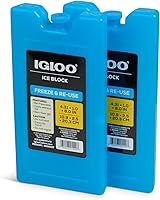
Igloo Maxcold Ice Blocks have hard plastic shells filled with non-toxic Ultratherm gel. Igloo says the gel provides extended cooling, but there's no fixed trip duration to plan around.
Use one cold source beside the load and another above or on the opposite side where they fit. Add cubes if the cooler still has large open spaces.
Skip these as your only cold source for a heavily loaded large cooler. Their useful role is flexible placement around a smaller load, not replacing all the ice space in a full-size chest.
When do slim ice packs make sense for a cooler?
Choose slim packs for lunches and compact coolers where thick blocks crowd out meal containers. Their shape lets you spread cold sources across several sides of the load.
Cool Coolers XL Slim Ice Packs have BPA-free plastic shells. Fit & Fresh describes them as leakproof and break-resistant, and recommends rinsing and drying them for cleaning.
Slide them beside containers rather than stacking every pack in one corner. Check that your packed lunch still leaves space for a pack above the food if needed.
Skip this style as the main ice supply for a large camping cooler. Thin packs save room, but saving room shouldn't take priority over carrying enough frozen material for the trip.
Who should choose large freezer blocks?
Choose large blocks for hard coolers with enough floor space and carrying capacity. Check both the cooler interior and your freezer before buying.
Performance Ice Blocks measure 11.25 x 2.5 x 9 inches and contain non-toxic gel. Igloo recommends these amounts for hard coolers:
| Hard cooler size | Igloo's recommended block count |
|---|---|
| 16–30 qt | At least 1 |
| 48–75 qt | 2 |
| 94–165 qt | At least 3 |
These recommendations apply to this block, not every reusable pack. They also don't establish a universal replacement for the volume ratio or promise a specific cooling time.
Skip large blocks for small shoulder bags or trips where you must carry everything far. Several blocks add substantial weight before you include food, drinks, or the cooler itself.
How should you pack the cooler before leaving?
Pre-chill the cooler, load cold food, and place ice below, around, and above the contents. This reduces the cooling work needed at departure.
- Chill the empty cooler with spare ice if practical, then remove that ice and water before loading.
- Put large frozen pieces or packs at the base.
- Pack sealed containers in meal groups, with raw meat contained below ready-to-eat food.
- Fill gaps with cubes or suitable packs, then add cold sources over the load.
- Close the lid fully and place the cooler in shade.
Put items you'll need first near the top. An organized load reduces the time spent holding the lid open while searching for lunch.
Freeze reusable packs fully before packing, allowing enough freezer space for all of them. A partly frozen pack starts with less frozen material available to absorb heat.
What mistakes waste ice or cooler space?
Packing warm contents and leaving too little room for ice are the biggest planning mistakes. Buying a larger cooler helps only if you also reserve enough space for cold sources.
Don't pack unnecessary outer cartons or oversized food tubs. Use sealed containers that fit the portions you need, while keeping food labels or cooking instructions where useful.
Avoid placing all the ice beneath a tall stack of food. Distribute cold sources so the upper containers aren't far from them.
Don't drain cold meltwater automatically when drinks and food are securely sealed. Keep water out of food containers, and drain as needed to manage leaks, spills, or room for fresh ice.
After the trip, empty, wash, and dry the cooler before storage. Follow our cooler cleaning guide for food spills and lingering smells, and hand-wash the reusable packs.
How do you know when to add more ice?
Check temperature and the remaining ice reserve, especially during long or hot trips. Visible ice in one corner doesn't confirm that every part of the load is cold enough.
Keep perishable food at 40°F or below, using a thermometer rather than touch. Follow FoodSafety.gov's food safety guidance when deciding how to handle food that has warmed.
Check the upper part of the load as well as items near the frozen blocks. Replenish ice before your reserve disappears, and avoid adding warm drinks to the food cooler.
Our guide to how long ice lasts in a cooler explains why melt time varies with packing and conditions.
How much ice for a cooler should you choose for your trip?
Choose the cold source around your load, refill options, and carrying distance. Use the volume ratio to reserve space, then confirm that your packing plan maintains the needed temperature.
Choose Cool Coolers slim packs for compact lunches, Igloo Maxcold blocks for smaller loads or mixed packing, and Performance blocks for roomy hard coolers. Add cubes when you need to fill gaps or replenish ice during travel.
For overnight trips, plan the refill before departure. Once the amount and format are settled, use how to keep ice longer in a cooler to reduce heat gain throughout the trip.
Frequently asked questions
How much ice should I put in a cooler?
Start with about 2 parts ice to 1 part food and drinks by volume. Leave room around containers and over the load rather than filling the cooler with food first.
Increase your ice reserve for heat or frequent opening, and use a thermometer to check perishable food temperature.
Is a 2 to 1 ice ratio enough for a cooler?
A 2 to 1 ice-to-contents ratio is a planning guide, not a fixed cooling duration. A warm cooler, warm drinks, direct sun, and frequent lid openings use up your ice reserve faster.
Pre-chill the load, keep the cooler shaded, and arrange a refill for longer trips.
Should ice go on top or bottom in a cooler?
Use ice on the bottom, around the contents, and on top so cold sources reach the whole load. Large blocks can form the base, while cubes fill smaller gaps.
Keep raw meat sealed below ready-to-eat food, and arrange frequently needed items where you can reach them quickly.
Are ice packs enough for a cooler?
Ice packs can be enough for a small, pre-chilled load if they maintain the required temperature throughout the trip. Match their size and number to the cooler and leave space to place them around the food.
For a large load or hot conditions, add more frozen packs or cubed ice.