YETI Tundra 45 Review: Worth It? (October 2026)
The YETI Tundra 45 suits weekend trips with short carries when you want a hard cooler that can be secured in a truck or boat. Choose a larger cooler if meals and drinks won't fit alongside enough ice.
On this page (9 sections)
- The YETI Tundra 45 at a glance
- How much can the Tundra 45 hold?
- Will it fit your vehicle, bottles and carrying route?
- What does its outdoor construction add?
- How should you pack it before leaving?
- Which packing and use mistakes should you avoid?
- How do the RTIC 65 and Lifetime alternatives compare?
- How should you clean and store the Tundra 45?
- Should you choose the YETI Tundra 45?
The YETI Tundra 45 suits weekend camping, fishing and tailgating with short carrying distances. Choose it when you need a hard cooler that stays secured during travel and holds your meals and drinks alongside enough ice.
Its main buying question is capacity: will your actual trip load fit without crowding out the ice? The RTIC and Lifetime options below suit larger loads, but both ask you to move and store a bigger cooler.
The YETI Tundra 45 at a glance
The Tundra 45 is a strong fit for vehicle-based weekends with a planned food load. Its storage basket, secure transport features and drain make sense when the cooler travels to one spot and stays there.
YETI Tundra 45
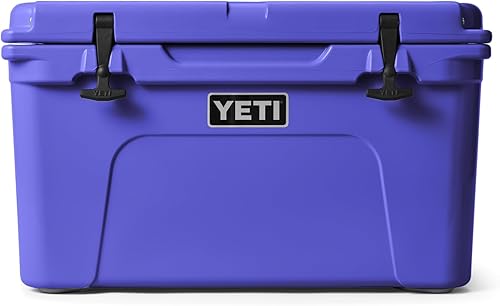
- 26 cans at a 2:1 ice-to-contents ratio
- Dry goods basket
- Molded tie-down slots
- Gasketed drain plug
Choose this cooler for weekend food and drinks that can travel together with plenty of ice. Its basket separates dry snacks, while tie-down slots help secure it for the drive.
Pros
- Dry goods basket keeps snacks above meltwater
- Tie-down slots accept straps or rope
- Gasketed drain empties without tipping
- One-piece rotomolded shell
Cons
- Food containers reduce the room available for drinks
- Full loads need a planned carrying route
- Tall bottles need a fit check
Don't choose it just because you recognize the name. Start with your meal plan, the space in your vehicle and the distance between parking and your destination.
A picnic beside the truck and a campsite down a long trail create very different carrying needs. For a wider view of those choices, see our guide to hard, wheeled and soft camping coolers.
Who should buy the YETI Tundra 45?
Buy it if you want one cooler for a manageable weekend food-and-drink load, with a place to keep snacks out of meltwater. It also suits boaters and truck owners who need to secure the cooler during travel.
Skip it if your group routinely packs several days of shared meals, bulky containers and lots of drinks. Moving to a larger size makes more sense than filling this one so tightly that little room remains for ice.
Also skip this style if you expect to carry your cooler a long way alone. Durable construction doesn't remove the weight of the contents or make an awkward route easier.
How much can the Tundra 45 hold?
The Tundra 45 holds 26 cans at a 2:1 ice-to-contents ratio. It can hold 54 cans without ice or 37 lb of ice alone, but those figures describe separate loads.
Use the ice-packed figure for trip planning. The no-ice count tells you about space, not how much chilled drink storage you'll have during a hot weekend.
Meals change the calculation further. A rigid lunch box, a carton and a large food tub leave gaps that loose cans don't, so a can count won't predict every mixed load.
Make a short packing list before choosing the size:
- Count drinks for the whole trip, including the return journey.
- Add every meal that needs cold storage.
- Include containers, sealed raw-food packages and chilled snacks.
- Leave room for ice around the contents, rather than only a thin layer on top.
If the load looks tight, reduce bulky packaging or choose more space. Don't solve a capacity problem by cutting the ice allowance you need for the trip.
For help estimating quantities, see how much ice to use in a cooler. Our guide to keeping ice longer explains how packing habits affect the result.
Will it fit your vehicle, bottles and carrying route?
The Tundra 45 needs space for its body, lid movement and your hands. Its exterior measures 25.5 x 16 x 15.5 in, so check the full footprint where you plan to put it.
Don't measure only an empty trunk. Account for camping chairs, tackle, luggage and anything that could block the handles or prevent the lid from opening.
Inside, the cooler measures 18.3 x 9.4 x 10.7 in, with 10.7 in of height. Measure tall bottles with their caps attached and consider whether your food containers can sit flat.
A container that fits sideways may take up space needed for another meal. Shorter, sealed containers often make a mixed load easier to arrange.
Plan the lifting route as carefully as the storage spot. Steps, soft sand and a high truck bed can make a short distance awkward once the cooler is full.
Place it near its final position before adding contents when practical. Keep access to both sides if 2 people will share the lift.
The YETI cooler size guide helps put this model in context. Read the YETI Roadie 24 review if you're also considering a different model.
What does its outdoor construction add?
The Tundra 45 combines a one-piece rotomolded shell with up to 3 in of insulation and a freezer-style rubber gasket. These features suit repeated outdoor use, while the packing routine still determines how much cooling work the ice must do.
The shell is made from UV-resistant polyethylene. Heavy-duty rubber T-Rex latches hold the lid closed, and molded tie-down slots accept straps or rope for transport.
Use those slots with suitable anchor points in your vehicle or boat. Keep straps positioned so you can still reach the lid and drain when you stop.
The included dry goods basket gives crushable snacks a separate place above meltwater. It helps organize the load, but it doesn't make loose food waterproof or replace sealed containers.
All food-contact surfaces are BPA-free and BPS-free. Keep raw foods contained anyway, since material choice doesn't prevent leaks or cross-contamination.
Read what a rotomolded cooler is if you want to understand how this construction differs from other hard coolers.
How should you pack it before leaving?
Pre-chill the cooler and its contents, then pack enough ice around an organized load. YETI ties ice retention to pre-chilling, ice quality, a 2:1 ice-to-contents ratio and limited lid openings.
A warm cooler and room-temperature drinks use some of the ice's cooling capacity before your trip gets going. Chill drinks and suitable food in the refrigerator beforehand, and cool the empty chest before loading.
Pack in the order you'll use things. Put later meals deeper in the load and keep the next drinks or snacks easy to reach.
Use sealed containers for foods that must stay dry. Keep raw meat in leakproof packaging, separate from ready-to-eat items, and don't treat the basket as a barrier against drips.
Fill spaces around the contents with ice rather than packing food as a solid block. Check that nothing sticks above the rim or stops the lid from closing fully.
If lots of people will reach for drinks throughout the day, consider a separate drink cooler. Frequent openings expose the shared food load to warm air and make it harder to keep everything organized.
Choose a shaded resting spot when possible and close the lid promptly after each use. Don't rely on a long ice-retention claim to make up for a cooler left open during lunch.
For longer stays, know where you'll get replacement ice. Our guide to how long ice lasts in a cooler explains why weather, contents and use change the answer.
Which packing and use mistakes should you avoid?
Avoid choosing by the model number, overfilling the cooler or planning only for the empty load. Those mistakes can leave you short of cold storage or struggling to move the cooler at your destination.
Don't assume “45” tells you exactly how your preferred bottles and meal tubs will fit. The usable dimensions and your packing plan are more helpful than the name.
Don't use the maximum no-ice can count as your weekend drinks target. Drinks, food and ice all compete for the same interior space.
Avoid loading everything before checking access to the drain. You need somewhere suitable for meltwater to go, especially if the cooler sits inside a vehicle or close to other gear.
Finally, don't treat a secure latch as permission to leave the cooler loose during travel. Restrain the cooler using its tie-down points and check that the load can't shift into other equipment.
How do the RTIC 65 and Lifetime alternatives compare?
Choose the RTIC for larger shared trip loads and the Lifetime for bulk provisions at a base camp. They solve a capacity problem, but they also require more lifting effort and storage space.
Their can counts and ice-retention claims aren't directly comparable. A useful comparison starts with capacity, empty weight and the way you'll use the cooler.
RTIC 65 Ultra-Tough: more room for group meals
The RTIC is the better fit when your group needs room beyond the Tundra's planned weekend load. Its 65 qt capacity suits shared meals and drinks when the cooler can stay close to the vehicle.
It has rotomolded construction, up to 2.4 in of closed-cell foam insulation and a freezer-style gasket. RTIC claims up to 7 days of ice retention when its cooling tips are followed.
The up-to-84-can capacity has no stated ice ratio, so don't compare it directly with YETI's ice-packed figure. Plan your ice and food space before deciding how many drinks to bring.
Its empty weight is 34.4 lb, and its exterior measures 31.58 in wide, 17.64 in deep and 16.66 in high. Check both the storage spot and the lifting route before moving up in size.
RTIC also allows this model to serve as a bench, step stool or tabletop. That's useful at a campsite, though gear piled on the lid must move whenever you need food.
Skip it if you rarely fill a smaller cooler or need frequent solo carries. Extra room has little value if the cooler becomes a burden to move.
Lifetime High Performance Cooler: bulk storage for base camps
The Lifetime fits trips where a large shared food supply stays in one place. Its 115 qt capacity makes sense for group provisions rather than light weekend packing.
It weighs 42.5 lb before you add contents. Arrange help and position it before filling whenever possible, especially if your route includes steps or uneven ground.
The included divider doubles as a cutting board. Clean it between tasks and keep raw-food preparation separate from ready-to-eat food.
Its drain spout accepts a garden hose, which can help route water away from the cooler's resting spot. Lifetime backs the cooler with a 5-year limited warranty.
Lifetime claims up to 10 days of ice retention and IGBC-certified bear resistance when locked. Follow the required locking instructions and local food-storage rules in bear country.
Skip this size if you won't use the space or lack a practical storage spot at home. A large empty cavity still needs a sensible packing plan for cooling.
For the broader brand choice, read YETI vs RTIC coolers. Our guide to whether a YETI cooler is worth it helps connect those features to your actual use.
How should you clean and store the Tundra 45?
Empty, wash and fully dry the cooler after each trip. Prompt cleanup is easier than removing old food residue and odors before your next outing.
The gasketed Vortex drain lets you empty meltwater without tipping the cooler. Remove food and loose debris first, then drain where the water won't soak your gear or create a slipping hazard.
Take out the basket and wash accessible surfaces with mild soap and water. Rinse away soap and pay attention to crumbs near the lid seal and residue around the drain.
Check that the gasket's contact area is clean before closing the cooler again. Dirt or trapped packaging can stop the lid from seating properly.
Let the interior, basket and drain area dry before storage. Leave the lid open while drying, and follow YETI's care guidance before using stronger cleaners.
For deeper cleanup, use our guide to cleaning a cooler and removing smells.
Should you choose the YETI Tundra 45?
Choose the YETI Tundra 45 for a weekend load that fits with enough ice, especially when secure transport and simple food organization matter. Measure your containers and vehicle space before committing.
Choose the RTIC if group meals need more room and you can manage the larger load. Choose the Lifetime if bulk storage at a base camp matters more than moving the cooler often.
If your main problem is the carry from parking to camp, settle that before choosing capacity. Use our best YETI alternatives guide to find a cooler that fits the whole trip.
Frequently asked questions
How many cans fit in a YETI Tundra 45?
The YETI Tundra 45 holds 26 cans at a 2:1 ice-to-contents ratio. It can hold 54 cans without ice or 37 lb of ice alone, but those are separate packing setups.
For a mixed food-and-drink load, leave room for meal containers rather than planning around the maximum can count.
How much does the YETI Tundra 45 weigh?
Confirm the exact Tundra 45 variant's empty weight with YETI if lifting weight decides your choice. Then account for the food, drinks and ice you'll add.
Plan around the complete load and your carrying route, especially if you need to lift it into a truck or carry it down steps.
How long does ice last in the YETI Tundra 45?
There's no single ice-retention time that applies to every Tundra 45 trip. YETI ties performance to pre-chilling, ice quality, a 2:1 ice-to-contents ratio and limited lid openings.
Hot conditions and warm contents increase the cooling work, so plan access to replacement ice for longer stays.
Is the YETI Tundra 45 easy to carry?
The Tundra 45 suits short carries and trips where the cooler can stay near your vehicle or boat. A full load takes more effort to move than an empty cooler.
Choose its resting spot before filling it, clear the route and arrange another person to help when needed.


