Igloo Maxcold Glide 110 Qt Wheeled Cooler Review: Worth It? (October 2026)
The Igloo Maxcold Glide 110 suits large group outings where one large wheeled chest can hold shared food and drinks. Choose it when you need the space and can manage vehicle loading; choose a smaller cooler for lighter trips.
On this page (10 sections)
- The Igloo Maxcold Glide 110 at a glance
- How much can the Maxcold Glide 110 hold?
- Will its wheels and handle help with a full load?
- How should you check vehicle and storage fit?
- What do its insulation and lid hardware offer?
- How should you pack it before an outing?
- What mistakes should you avoid during use?
- How should you clean and store the cooler?
- Which alternatives suit different trips?
- Should you buy the Igloo Maxcold Glide 110?
The Igloo Maxcold Glide 110 is a good fit for large group outings when you need one chest for shared food and drinks. Its wheels help with the journey from vehicle to gathering spot, but you still need a plan for lifting and storage.
Buy it for the load you bring regularly, rather than the biggest gathering you might host someday. A smaller cooler makes more sense if most trips involve a picnic lunch and a few drinks.
The Igloo Maxcold Glide 110 at a glance
The Maxcold's strongest reason to buy is space for a shared group load. It suits outings where keeping supplies together matters more than having a chest that's easy to tuck away.
Igloo Maxcold Glide 110
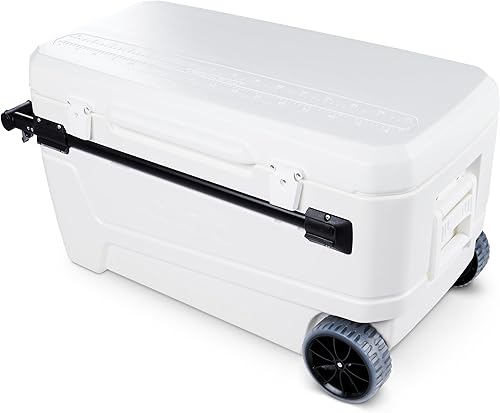
- 110 qt capacity
- Holds 168 cans
- Telescoping handle
- Soft-ride wheels
- THERMECOOL insulation in body and lid
A large wheeled chest for shared meals and drinks at group outings. Choose it when the load calls for the space and you have a workable plan for lifting it into your vehicle.
Pros
- Room for group food and drinks
- Telescoping handle and soft-ride wheels
- Insulation in both body and lid
- Stainless steel hinges and DuraLatch closures
- Lid ruler for measuring a catch
Cons
- Long body needs storage and turning room
- Loaded vehicle lifts may require help
- Large capacity is unnecessary for light day trips
When does the Igloo Maxcold make sense?
Choose it for group camping, tailgates or gatherings where you're responsible for several people's food and drinks. Keeping those supplies in one chest can simplify packing and leave fewer separate items to collect afterward.
Skip it for light day trips if you rarely fill more than a small cooler. Unused space still takes up room in the vehicle, and a large chest needs a deliberate packing plan to keep contents cold.
Our best wheeled coolers guide compares other load sizes and moving needs. For a wider choice of cooler types, start with our guide to hard, wheeled and soft camping coolers.
How much can the Maxcold Glide 110 hold?
The Maxcold offers 110 quarts of capacity, with a stated maximum of 168 cans. Treat the can count as a size reference, then allow space for the ice and food your outing requires.
| Detail | Igloo Maxcold Glide 110 |
|---|---|
| Capacity | 110 qt |
| Can capacity | Up to 168 cans |
| Dimensions (D x W x H) | 37.5 x 19 x 20.6 in |
| Empty weight | 25.4 lb |
| Handle | Telescoping |
| Wheels | Soft-ride |
| Insulation | THERMECOOL in body and lid |
| Lid feature | Ruler for measuring a catch |
| Included component | Drain plug |
Start your packing estimate with meals, drinks and cooling supplies as separate groups. Tall bottles, rigid food tubs and loose cans leave different gaps, so a volume figure can't tell you exactly how your groceries will fit.
Count the meals you'll carry and the drinks people will need between chances to restock. Then consider whether all those supplies need to share one chest, especially if people will open it often for drinks.
A second small drink cooler can reduce lid openings around the main food supply. That approach also splits the load, though it gives you another item to move and store.
Our guide to how many cans fit in a cooler explains why advertised capacity and a practical mixed load differ. Before committing to this size, sketch out a typical trip rather than an unusually large one.
Will its wheels and handle help with a full load?
The wheels and telescoping handle help you pull the cooler along a suitable path. They don't solve the hardest lifts, such as getting a full chest into a trunk or carrying it up steps.
Think through the whole route before loading. A short paved walk from a parking space is a different job from crossing loose gravel, a steep slope and a flight of stairs.
Pack close to the vehicle when possible so you don't have to lift a full chest across the house first. Keep help available for the vehicle lift if you can't comfortably manage the load yourself.
Use the handle for pulling rather than as a lifting point, and avoid yanking the cooler over curbs. On a slope, keep control of the load and stop if the cooler becomes difficult to manage.
The Coleman vs Igloo wheeled cooler comparison can help if you're choosing between the brands for routine outings. For frequent sand crossings, compare wheeled coolers for the beach before choosing mainly by capacity.
How should you check vehicle and storage fit?
Check the opening, the resting space and the room to turn before buying. A cooler can fit inside a cargo area yet be awkward to pass through its narrowest opening.
Measure the vehicle opening with the seats arranged as they'll be during the trip. Allow room for the other supplies you carry, rather than giving the cooler the entire available space.
Use painter's tape to mark its footprint on the garage floor or cargo area. This makes it easier to see whether bags, chairs and other gear can fit around it.
Leave enough clearance above the lid to reach food without unloading nearby gear. Also check whether you can get your hands into position for lifting when the cooler is surrounded by luggage.
At home, choose a storage spot you can reach without moving several other heavy items. If retrieving the cooler becomes a chore, you'll be less likely to use it for the outings that justify its size.
What do its insulation and lid hardware offer?
The Maxcold has THERMECOOL insulation in both the body and lid, plus hardware aimed at regular outdoor use. These features support its role as a group ice chest, but they don't establish a fixed ice-retention time.
Igloo says the UV inhibitors and infrared technology help protect against sun damage. Keep the cooler shaded anyway, since sun protection for the shell doesn't replace good temperature management.
The lid uses impact-resistant DuraLatch closures and stainless steel hinges. Close the lid fully and check that nothing is trapped along its edge before fastening the closures.
The ruler on the lid gives anglers a place to measure a catch. Keep fish handling separate from ready-to-eat food, and clean any surface that comes into contact with raw fish.
For trip planning, focus on how you'll use the chest rather than guessing a number of days from its construction. Our guide to how long ice lasts in a cooler explains the main factors.
How should you pack it before an outing?
Start cold and pack in the order you'll use things. A large cooler works better when it holds chilled supplies rather than having to cool warm drinks and containers after departure.
Prechill the chest and its contents
Put ice or cold packs in the cooler ahead of packing to draw heat out of the interior. Remove any warm meltwater, then load refrigerated food and drinks with fresh cooling supplies.
Freeze suitable items in advance if they can thaw gradually during the trip. Leave expansion space in containers and avoid freezing glass bottles.
Make frequently used items easy to reach
Group breakfast, lunch and dinner ingredients so you can find them without searching the entire chest. Keep the next meal accessible, and put less urgent items farther down.
Use leak-resistant containers for food that needs to stay dry. Keep raw meat sealed and separated from ready-to-eat items so leaks don't spread through the shared load.
Leave room for ice
Don't fill the chest with groceries and hope a thin layer of ice will cover the trip. Cooling supplies need their own share of the space, especially in warm weather or when refills are difficult.
Use our guide to how much ice you need for a cooler to plan that balance. Work out the ice supply before departure, including where you can replace it on a longer outing.
What mistakes should you avoid during use?
Avoid warm loading, repeated searching and careless draining. These habits can undermine a well-packed cooler and create extra cleanup.
Choose a shaded spot when you arrive and make the contents easy to access. If everyone has to move bags or reach around furniture, the lid is more likely to stay open while people search.
Tell the group where drinks and shared food are packed. Taking several items out at once can reduce repeated openings during meal preparation.
Don't drain cold water simply because some ice has melted. While ice remains, that water can help keep sealed drinks cold; protect food that shouldn't sit in water with suitable containers.
Before moving the cooler, check that the lid closures and drain plug are secure. Keep the chest upright and secure it in the vehicle so it can't shift during travel.
How should you clean and store the cooler?
Wash, rinse and dry it fully after each outing. Leaving food residue or moisture inside a closed chest makes the next trip harder to prepare for.
Empty it promptly, including small scraps caught near the drain. Clean the interior and lid with mild soap, warm water and a soft cloth, then rinse away soap and loosened debris.
Pay attention to the drain opening and the edges around the lid. Avoid scraping with sharp tools or using harsh cleaners that could damage surfaces.
Let the cooler dry with the lid open before putting it away. Check the plug, closures, hinges and wheels for debris or damage while the chest is empty and easy to inspect.
After beach use, rinse away sand before operating moving parts. Store the cooler in a dry place where the lid and handle aren't forced against surrounding items.
Which alternatives suit different trips?
Choose the YETI Roadie 32 Wheeled for smaller loads or the Igloo Trailmate Journey 70 for uneven access paths. Each solves a different problem from the Maxcold's emphasis on group capacity.
YETI Roadie 32 Wheeled for smaller outings
The Roadie suits picnics and shorter outings where a large shared chest would be excessive. Its retractable Periscope handle handles pulling, while LipGrip handles provide carrying points that stay out of the way.
YETI describes the solid, single-piece NeverFlat wheels as impact- and puncture-resistant. BearFoot non-slip feet help resist sliding when the cooler is set down, though you should still secure it during travel.
Skip the Roadie if your main need is to consolidate a large group's supplies. Its wheel construction doesn't make up for choosing too little packing space.
Igloo Trailmate Journey 70 for uneven routes
The Trailmate suits trips where the path deserves as much attention as the food load. Its 10-inch never-flat wheels and ground clearance are designed for sand and other challenging terrain.
It has a locking, telescoping steel Glide handle and a removable butler tray that stores under the lid. The tray gives you a serving surface when a picnic table isn't nearby.
Its 70-quart capacity holds up to 112 cans, and it weighs 34.7 lb empty. Skip it if the main obstacle is lifting into a vehicle, since it starts heavier than the Maxcold despite offering less space.
Should you buy the Igloo Maxcold Glide 110?
Buy the Igloo Maxcold for regular group loads when you have room to store it and a manageable route from vehicle to destination. Before ordering, settle who will handle the full chest and where the ice supply will come from.
Choose the Roadie for smaller outings where excess cooler space gets in the way. Choose the Trailmate when uneven access paths and a serving tray matter more than the largest load.
If the route includes frequent sand crossings, use our best wheeled coolers for the beach guide to make the final choice. Match the cooler to the trip you'll take most often.
Frequently asked questions
How many cans does the Igloo Maxcold Glide 110 hold?
The Igloo Maxcold Glide 110 holds up to 168 cans. Use that figure to compare size, then plan separately for ice, food containers and bottles.
Don't assume the full can count leaves enough room for the cooling supplies and meals you need on the same trip.
Does the Igloo Maxcold Glide 110 have wheels?
Yes, it has soft-ride wheels and a telescoping handle for pulling a load. Wheels help along a suitable route, but steps, vehicle loading and some obstacles still require lifting.
Plan those parts of the trip before filling the cooler, and arrange help when the load calls for it.
How long does ice last in the Igloo Maxcold Glide 110?
There isn't a supported fixed ice-retention time to use here. Plan around the weather, starting temperatures, ice supply and how often people open the lid.
Prechill the cooler, load cold food and keep it shaded, then arrange an ice refill option for longer trips.
Is the Igloo Maxcold Glide 110 easy to store?
It needs a storage space larger than its 37.5 x 19 x 20.6-inch body so you can reach and move it. Measure the route into that space as well.
A chest that fits against a garage wall can still be awkward to turn through a narrow doorway.