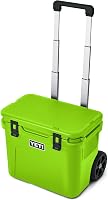
Coleman vs Igloo Wheeled Coolers: Which Rolls Better? (October 2026)
In this Coleman vs Igloo comparison, choose Coleman for smaller outings and easier lifting or Igloo for large groups and bigger food loads. Match the cooler to your vehicle, packed weight and route before choosing by capacity.
On this page (10 sections)
- Coleman vs Igloo: how much cooler do you need?
- Which cooler is easier to roll, lift and fit in a car?
- Who should buy the Coleman Xtreme Rolling Cooler?
- Who should buy the Igloo Maxcold Glide 110?
- Which cooler makes sense for camping, beaches and tailgates?
- Which one keeps ice longer?
- How should you pack either cooler before leaving?
- What packing and buying mistakes should you avoid?
- How do you drain, clean and store these coolers?
- Coleman vs Igloo: which should you choose?
Choose Coleman for smaller outings and easier lifting, or Igloo for large groups and bigger food loads. This Coleman vs Igloo comparison favors the cooler that fits your normal trip, from packing the car to putting it away afterward.
The wheel names don't establish which rolls better on every surface. Your route, packed weight and unavoidable lifts matter more than choosing a brand first.
These 2 models also serve different needs. Buying the larger one makes sense when you regularly use the room, but creates extra work when you don't.

Coleman vs Igloo: how much cooler do you need?
Choose Coleman for a modest shared load and Igloo when food, drinks and ice regularly compete for space. The Coleman holds 50 qt, while the Igloo holds 110 qt.
Their advertised can capacities are up to 84 and 168, respectively. Use those figures to compare scale, not as a promise that your drinks, lunch containers and ice will all fit together.
Start with a sample packing list for your most common outing. Count drinks, picture the actual food containers, then allow space for ice around the contents.
A tall bottle or wide lunch box can shape your packing plan more than the number of people going. Our guide to how many cans fit in a cooler explains why can counts and real packing space differ.
Coleman vs Igloo capacity for day trips and weekends
For a day trip, buy around the meals and drinks you'll actually bring. A few people carrying lunch have different needs from a group sharing all-day drinks and dinner supplies.
For a weekend, consider whether you can restock nearby. A trip with easy access to ice and groceries needs a different packing plan from a remote campsite.
The larger cooler earns its space when you need to carry the whole supply at once. Don't buy it only because a longer trip sounds like it should require the biggest option.
Use our cooler size guide if you're still unsure how your group size, food choices and trip length fit together.
Which cooler is easier to roll, lift and fit in a car?
Coleman is easier to accommodate when lifting and storage are the main constraints. It weighs 12.7 lb empty, compared with 25.4 lb for the Igloo, before you add food, drinks or ice.
That difference matters at a trunk lip, stairway or high storage shelf. Wheels help between those points, but every lift still requires you to manage the full load.
The Coleman measures 22.6 x 17.6 x 17.5 in; the Igloo measures 37.5 x 19 x 20.6 in, in depth x width x height. Mark out those spaces with a tape measure before ordering.
Check the vehicle opening as well as the floor space inside. Leave room for your hands, nearby luggage and enough clearance to remove the cooler without unpacking the car.
What do the wheels and handles tell you?
Coleman describes its wheels as all-terrain wheels for sand, gravel and grass. The Igloo has soft-ride wheels, and both models have telescoping handles.
Those descriptions don't establish a direct winner for your route. Deep loose sand, ruts and steep slopes can make any loaded wheeled cooler harder to pull.
Walk the route in your mind from parking spot to destination. Note curbs, narrow gates and steps, then decide where you'll need another person or a different path.
For shore trips, our guide to wheeled coolers for the beach helps you weigh the walking surface against the load you need to bring.
Who should buy the Coleman Xtreme Rolling Cooler?
Buy the Coleman if you want a manageable cooler for smaller picnics, campsite meals and routine outings. Its smaller body makes more sense when the cooler shares vehicle space with chairs, bags and other gear.
It's also the stronger fit when one person handles most of the loading. The lower empty weight leaves you less cooler weight to manage before the contents go in.
The retractable handle collapses for storage, which helps when putting it into a vehicle or garage. Its leak-resistant drain lets you release meltwater without lifting or tipping the body.
Coleman says the lid doubles as a seat and supports up to 250 lb. That's useful at a picnic or campsite, provided the cooler sits level and you stay within that limit.
Skip this model if large meal containers and a full group's drinks already crowd your current cooler. Moving to a smaller load only works if you're willing to split supplies or restock.
Also reconsider it if your route has repeated stairs. A lighter wheeled cooler still needs carrying there, so plan around the packed load rather than assuming the wheels solve access.
Who should buy the Igloo Maxcold Glide 110?
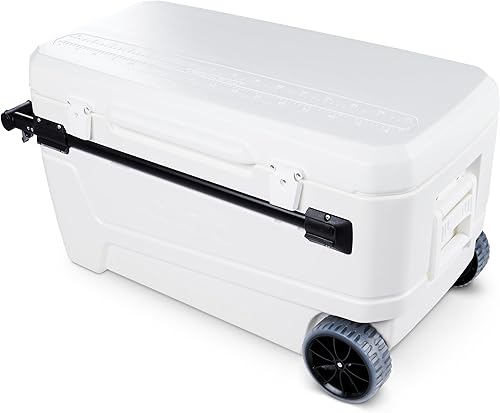
Buy the Igloo if you regularly organize shared food and drinks for a large group. Its extra room suits outings where one central cooler supplies a picnic table, tailgate or camp kitchen.
It also fits fishing trips where space for a catch is part of the plan. The ruler on the lid gives you a place to measure fish, though you should still follow local measurement rules.
The Igloo has THERMECOOL insulation in the body and lid, impact-resistant DuraLatch lid closures and stainless steel hinges. Igloo says its UV inhibitors and infrared technology help protect against sun damage.
Those details suit buyers who want the larger format and its lid hardware. They don't remove the need to protect the cooler during transport or close it carefully.
Skip the Igloo if you usually travel alone, have a crowded compact car or must store the cooler on a high shelf. Its size becomes a burden when you rarely need the extra space.
For boat use, check the available deck space and loading access before choosing. Our guide to coolers for fishing and boats covers the trip needs that matter beyond capacity.
Which cooler makes sense for camping, beaches and tailgates?
Choose by the job the cooler performs at your destination. A cooler serving occasional snacks has different demands from one holding every meal for the group.
For camping, work backward from your menu. Bulky ingredients, rigid containers and separate raw-food packaging can use room quickly, even when the number of campers is small.
For the beach, the walk deserves as much attention as the food supply. Splitting drinks into another bag may make more sense than pulling one heavily packed cooler through loose sand.
At a tailgate or backyard gathering, a larger cooler is easier to justify when it stays close to the vehicle. Frequent drink access also matters, so organize the contents before guests arrive.
If you want one cooler for several uses, choose around the outing you take most often. Borrowing or adding capacity for a rare large event can be simpler than storing an oversized cooler all year.
Which one keeps ice longer?
These facts don't establish an ice-retention winner. Coleman claims up to 5 days in temperatures as high as 90°F, but there isn't a matching duration for the Igloo here.
An insulation name or larger capacity doesn't supply that missing comparison. Don't choose the Igloo expecting a longer hold, or rule it out solely because Coleman gives a day count.
For either model, warm contents use ice as they cool down. Start with chilled food and drinks, and cool the empty interior before the main packing if it has been sitting somewhere hot.
Keep the cooler shaded where practical and close the lid promptly after taking something out. A simple contents map helps people find drinks without searching through every layer.
For more ways to reduce avoidable melting, read how to keep ice longer in a cooler. Treat ice duration as a trip-planning factor, while checking food temperature separately.
How should you pack either cooler before leaving?
Pack for steady cooling, easy access and a manageable move. Do the main packing near your vehicle or destination so you don't create an unnecessary carry.
Start with food and ice space
Set out the food containers before filling the cooler. Use sealed containers that fit together, and avoid packing fragile food beneath heavy drinks.
Keep raw meat in leakproof packaging, separated from ready-to-eat food. A cooler thermometer helps you check that perishables stay at 40°F or below.
Give ice room around the contents rather than filling every gap with another drink. Our guide to how much ice you need for a cooler can help you plan that balance before departure.
Arrange the items you'll reach for first
Put frequently used drinks and the next meal where you can reach them quickly. Keep later meals lower down so each stop doesn't require a full rearrangement.
If several people share the cooler, tell them where the common items are. That small step reduces rummaging and keeps food packaging from being shifted repeatedly.
Check the cooler before moving it
Make sure the drain is closed and the lid is secure before loading. The Igloo includes a drain plug, so include it in your departure check.
Take a short, controlled pull on level ground before heading away from the car. If the load feels awkward there, adjust it before reaching sand, a slope or a crowded path.
Get help for lifts you can't comfortably manage, and keep your hands away from pinch points. Don't use the pulling handle as a lifting point unless the manufacturer's instructions permit it.
What packing and buying mistakes should you avoid?
Avoid choosing extra capacity without a plan to move, cool and store it. The wrong size often creates trouble before the cooler reaches the campsite.
- Buying for a rare event: Match the cooler to your usual outings, then plan separately for an occasional crowd.
- Treating can capacity as meal capacity: Food containers and ice need space that a drink count doesn't describe.
- Packing warm drinks at departure: Chill them first so the ice doesn't have to do all that cooling.
- Ignoring the last part of the route: Steps and loose ground can matter more than a long smooth path.
- Packing without an access plan: Put common drinks within reach so people don't disturb every meal.
- Assuming every hard lid is a seat: Coleman's stated seat limit doesn't apply to the Igloo.
Before buying, identify the single hardest part of your routine: loading the car, reaching the campsite, fitting the food or finding storage. Let that constraint decide which compromise makes sense.
How do you drain, clean and store these coolers?
Clean either cooler after each outing and dry it fully before storage. Food spills and trapped moisture are easier to deal with before they become lingering odors.
Remove leftover food and ice, then drain the water somewhere suitable. Open the Coleman drain while it sits securely; plan any repositioning of the larger Igloo before attempting it.
Wash the interior with mild soap, warm water and a soft cloth, following the care instructions. Pay attention to corners, the lid edge and the drain area where residue can collect.
Rinse away soap and let the cooler air-dry with the lid open. Avoid putting it away damp or closing it around forgotten food packaging.
For stubborn smells or visible mold, follow our guide to cleaning a cooler rather than mixing cleaning chemicals. Before the next outing, check the drain, wheels, handle and lid hardware for damage.
Coleman vs Igloo: which should you choose?
Choose Coleman when access and handling limit your trips; choose Igloo when packing room is the recurring problem. Make that decision using your normal load, rather than the largest outing you can imagine.
The Coleman Xtreme Rolling Cooler suits buyers who need to fit a cooler around other gear and handle regular loading themselves. The Igloo Maxcold Glide 110 suits group organizers who have the space and help to manage a larger supply.
Before ordering, confirm 3 things: the cooler fits through your vehicle opening, you have a plan for each lift, and your food still leaves room for ice. A failure on any one of those points is a reason to reconsider the size.
If neither fits those needs, use our guide to the best wheeled coolers to find a more suitable format.
Frequently asked questions
Which is better, Coleman or Igloo wheeled coolers?
For these models, Coleman is the better fit for smaller outings and easier lifting, while Igloo suits large groups with substantial food and drink loads. Choose around your usual trip, vehicle space and ability to move the packed cooler, rather than buying extra capacity for an occasional event.
Does the Coleman or Igloo hold more cans?
The Igloo Maxcold Glide 110 holds up to 168 cans, compared with up to 84 for the Coleman Xtreme Rolling Cooler. Those figures don't represent a complete food-and-ice packing plan.
Leave room for cooling supplies, meal containers and anything that must stay upright during travel.
Which wheeled cooler is lighter?
The Coleman is lighter at 12.7 lb empty, compared with 25.4 lb for the Igloo. Packed weight matters more when loading a vehicle, crossing steps or lifting onto a boat.
Plan each unavoidable lift before filling either cooler, and arrange help when the load exceeds what you can comfortably manage.
Can the Coleman cooler keep ice for 5 days?
Coleman claims up to 5 days of ice retention in temperatures as high as 90°F. Your results depend on starting temperatures, ice quantity, sun exposure and lid openings.
For perishable food, use a cooler thermometer and keep the contents at 40°F or below rather than relying on a day count.